
Retinal vs Retinol: 5 Reasons to Switch for Faster Anti-Aging
When diving into the ultimate retinal vs retinol debate, any skincare enthusiast wants to know which retinoid delivers the fastest results. For years, Retinol has held the undisputed crown as the ultimate anti-aging savior for fading fine lines and boosting collagen. However, anyone who has battled the dreaded “retinol purge”—characterized by dry flakes and a damaged skin barrier—knows this crown comes with a heavy price.
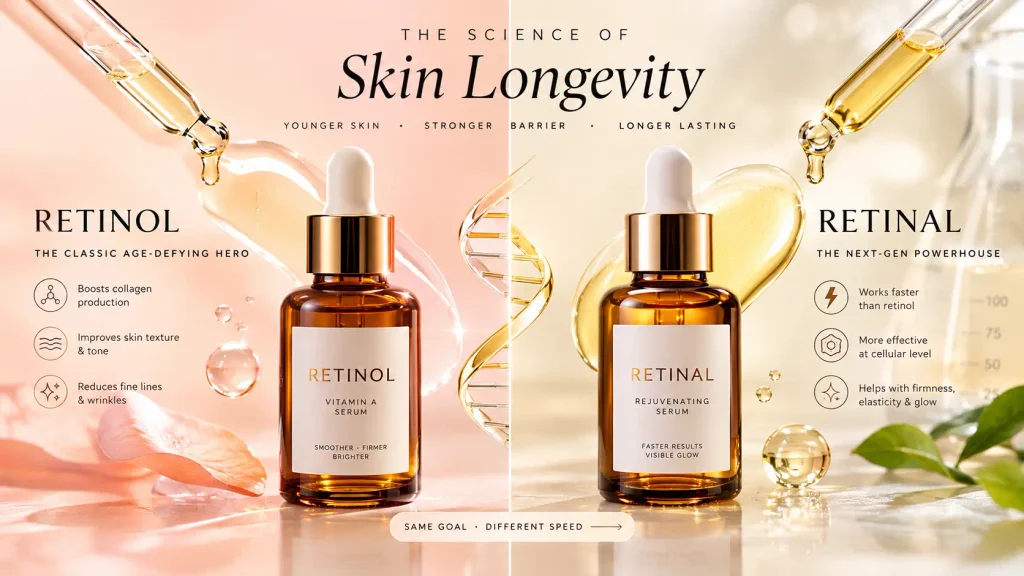
But what if you could get all the youth-preserving benefits 11 times faster with significantly less irritation? Welcome to the era of Retinaldehyde, where choosing retinal vs retinol is no longer just a preference, but a major upgrade for your skin longevity.
The Science: Understanding Retinal vs Retinol
To truly understand the retinal vs retinol difference, we need to look at how our skin processes topical retinoids. Both ingredients are derivatives of Vitamin A, but neither can benefit the skin directly. When you apply them, your skin must convert them into its biologically active form: Retinoic Acid.
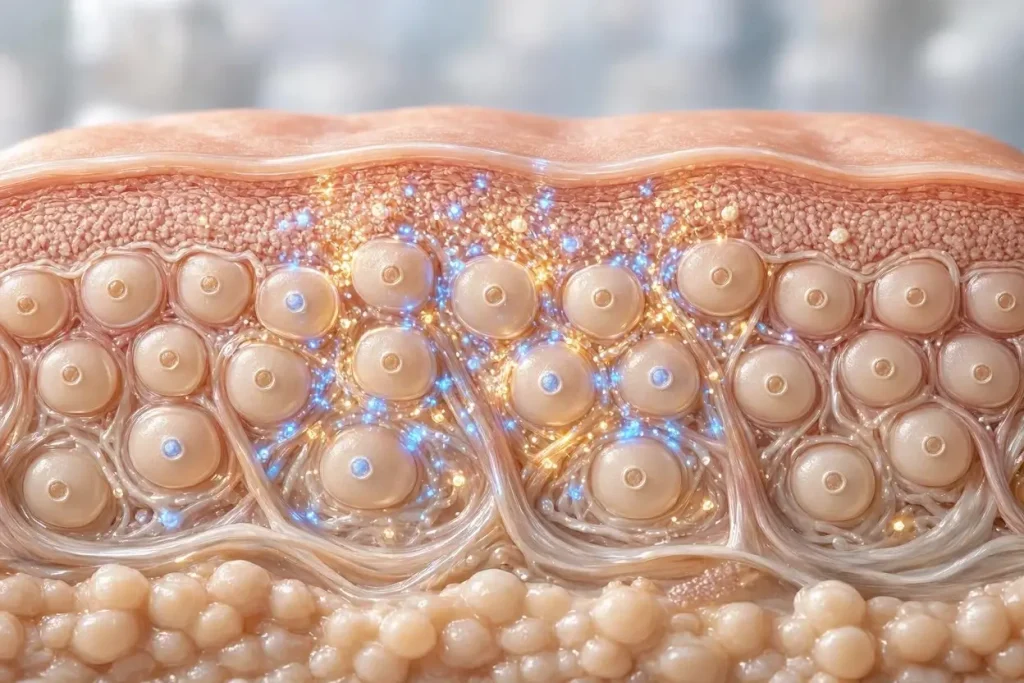
Traditional retinol requires a slow, two-step conversion process (Retinol (right arrow ) Retinaldehyde (right arrow ) Retinoic Acid). On the other hand, Retinal (Retinaldehyde) is already just one step away from becoming Retinoic Acid. This shorter pathway is the secret behind its breakthrough speed and high efficiency.
1. The 11x Speed Advantage: Why Retinal Works Faster
When patients ask a skin therapist, “is retinal better than retinol for quick results?”, the answer lies in scientific clinical trials. Because Retinal only requires a single conversion step within the skin, it undergoes cell renewal up to 11 times faster than traditional retinol. While a standard retinol serum can take anywhere from 12 to 24 weeks to show visible improvements in fine lines and skin texture, Retinal starts delivering noticeable changes in skin tone and elasticity in as little as 4 to 8 weeks. If you want to accelerate your skin longevity goals without waiting for months, switching your molecule is the smartest move.
2. Less Irritation: Why Retinal is Gentler on the Skin Barrier

A common misconception in the retinal vs retinol debate is that faster speed means more damage. Naturally, beginner users often ask, “does retinal cause purging and redness like traditional retinol?” Surprisingly, clinical studies show that Retinaldehyde is incredibly well-tolerated by the skin. Because it converts into retinoic acid more efficiently, it does not linger on the skin surface to cause surface-level peeling or flaking. This makes it an absolute holy grail for individuals with sensitive skin or those who have previously damaged their skin barrier with harsh, traditional anti-aging creams.
3. The Antibacterial Edge: Better for Acne-Prone Skin
Here is a secret that many traditional beauty brands do not highlight when discussing retinal vs retinol: Retinaldehyde is the only retinoid derivative that possesses direct antibacterial properties. This makes evaluating retinal vs retinol for acne a massive win for those struggling with frequent breakouts. While traditional retinol simply speeds up cell turnover to clear pores, Retinal goes a step further by actively targeting and destroying C. acnes—the specific bacteria responsible for inflammatory acne. By introducing it into your skincare routine steps, you effectively target both stubborn adult acne and early signs of aging at the exact same time.
4. Maximum Potency at Lower Concentrations
One of the most shocking retinal serum benefits is its sheer strength. Because it is so highly efficient, Retinal works at much lower percentages compared to retinol. A 0.1% Retinal serum delivers anti-aging results that are comparable to, or even better than, a strong 1% traditional retinol cream. This allows your skin to experience maximum cell renewal with a much lighter ingredient load, future-proofing your face for long-term skin longevity.
5. Advanced Encapsulation: The Era of Stable Skincare
In the past, when scientists asked, “what is retinal in skincare’s biggest challenge?”, the answer was always stability. Retinaldehyde used to degrade quickly when exposed to air and light. However, modern 2026 clinical beauty brands utilize encapsulated retinal. This advanced delivery system protects the molecule, ensuring it remains highly stable and activates only deep inside your skin layers, providing consistent and flawless glass skin results.
How to Use Retinal Serum for Beginners
To unlock the maximum power of Retinaldehyde without compromising your skin barrier, you must follow the correct skincare routine steps. If you are learning how to use retinal serum for beginners, always start by applying a pea-sized amount only at night, twice a week. Follow the “sandwich technique” by applying a layer of a ceramide-rich moisturizer before and after your serum. As your skin builds tolerance, you can slowly increase the frequency to every alternate night. Don’t forget to apply a broad-spectrum sunscreen the next morning to protect your newly renewed cells.
Top Retinal Recommendations: Indian & K-Beauty Picks
For those looking to upgrade their skincare routine, choosing a well-formulated, encapsulated product is key. If you prefer affordable clinical-grade results, some of the best retinal serum in India options include the:
1. Minimalist 0.1% Retinal Tasmannia Berry Serum
2. Re’equil 0.1% Retinaldehyde Cream
both of which offer clinical-grade results on an affordable budget.
However, if you want to experience the gold standard of Korean glass skin innovation, K-Beauty offers incredible formulas. The Beauty of Joseon Revive Eye Serum: Ginseng + Retinal is a global cult-favorite, utilizing stabilized liposomal retinal to treat not just the delicate eye area but the entire face. Another premium K-Beauty powerhouse is the By Wish trend Vitamin A-mazing Bakuchiol Night Cream, which beautifully pairs Retinaldehyde with Bakuchiol to deliver ultimate skin longevity with zero irritation.
Conclusion: Time to Upgrade Your Retinoid
In the ultimate battle of retinal vs retinol, the science is clear. Retinaldehyde delivers 11x faster cell turnover, directly fights acne-causing bacteria, and respects your skin barrier far better than traditional retinol. If your goal is true skin longevity and faster anti-aging results, it is officially time to make the switch.
Frequently Asked Questions (FAQs)
Q1. Is retinal better than retinol for wrinkles?
Yes, Retinal (Retinaldehyde) is significantly better and faster than traditional retinol for treating wrinkles. Since it is only one conversion step away from retinoic acid, it boots collagen and enhances cell turnover 11 times faster, showing visible anti-aging results much earlier.
Q2. Does retinal cause purging like retinol?
While any potent retinoid can cause mild transition signs, Retinal is known to cause much less irritation and purging compared to traditional retinol. Because it converts more efficiently within the skin layers, it doesn’t linger on the surface to cause excessive flaking or dryness.
Q3. Can I use retinal vs retinol for acne-prone skin?
Absolutely. In the retinal vs retinol for acne comparison, Retinal is the ultimate winner. It is the only Vitamin A derivative that has direct antibacterial properties, meaning it actively targets C. acnes bacteria while simultaneously clearing out clogged pores.
Q4. Which is better for sensitive skin: retinal vs retinol?
Encapsulated Retinal (like the ones found in top K-Beauty products) is highly recommended for sensitive skin. It delivers maximum youth-preserving benefits at much lower concentrations (like 0.05% or 0.1%), ensuring your skin longevity goals are met without damaging the skin barrier.
Medical Disclaimer
Medical Disclaimer: The information provided in this article is for educational and informational purposes only and should not be considered as personalized medical advice [health]. While Retinaldehyde is an over-the-counter skincare ingredient, every skin type responds differently [health]. Always perform a patch test before introducing new active ingredients into your routine [health]. If you have severe skin conditions like cystic acne, rosacea, or eczema, or if you are pregnant or breastfeeding, please consult a certified dermatologist or medical professional before starting any retinoid therapy [health]. Always double-check product physical labels for correct percentages and exact usage instructions [health].


One Comment