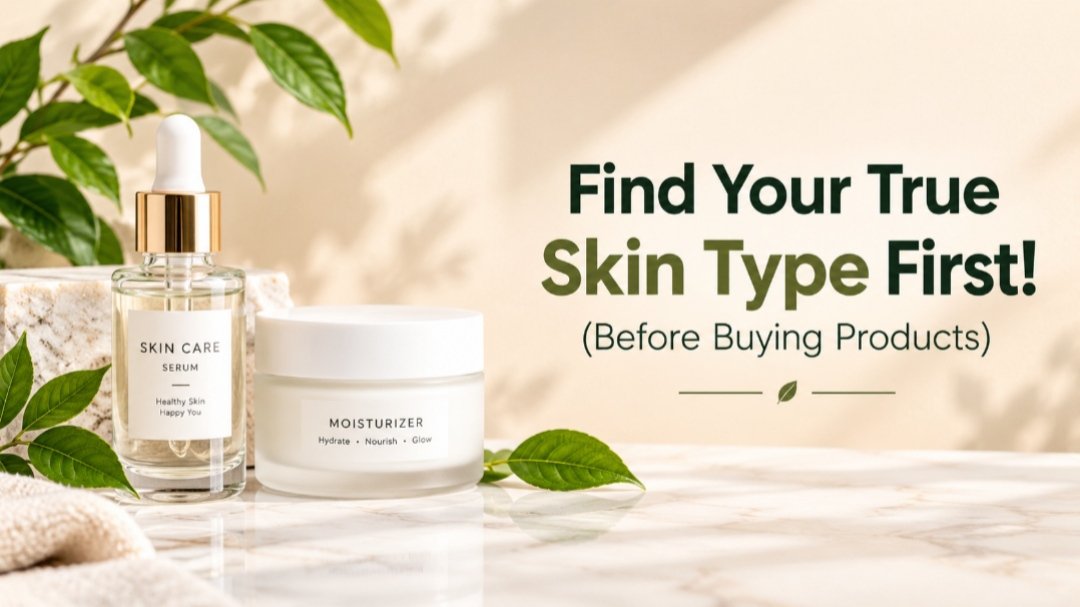
Find Your True Skin Type at Home:2 Secrets Before Buying Skincare

“…how to find your skin type easily at home.”
Buying new skincare products can be exciting, but it often feels like a guessing game. You might spend money on a trendy moisturizer or serum, only to find out it causes breakouts, clogs your pores, or leaves your skin feeling tight and dry. The truth is, you cannot build an effective skincare routine or get glowing skin without knowing your exact skin type.
As a professional skin therapist with years of hands-on experience, I always tell people that understanding your skin is the absolute first step before spending your hard-earned money on products. In this complete guide, I will show you how to find your skin type easily at home.
How to Find Your Skin Type: The 5 Main Skin Types
Before we learn how to test your skin, it is important to understand the different skin types. In human dermatology, skin is generally classified into five main categories: 👇
Oily, Dry, Combination, Sensitive, and Normal. Each skin type behaves differently based on factors like genetics, climate, and sebum (oil) production. For instance, oily skin produces excess sebum, while dry skin lacks moisture and natural lipids. Knowing these categories helps you analyze what your skin actually needs. Let’s look at the characteristics of each skin type so you can evaluate yours.This will help you find your skin type easily.
1. Oily Skin
After one hour of washing your face, if your entire skin looks shiny and feels greasy to the touch, you have an oily skin type. This happens because your sebaceous glands produce an excess amount of sebum (oil), particularly in the T-zone (forehead, nose, and chin). People with oily skin often notice large, visible pores and are highly prone to blackheads, whiteheads, and frequent acne breakouts
Find your skin type: Why is it like this?”
As a skin therapist, I often get asked this question. Oily skin is primarily a result of genetics and hormones, meaning it is passed down through your family. However, your lifestyle and diet also play a huge role. Eating too many high-glycemic foods, dairy items, and greasy or junk foods can trigger inflammation and cause your oil glands to produce even more excess sebum. Environmental factors like hot and humid weather can also make it worse.
2. Dry Skin
On the other hand, if your skin feels tight, stretched, and uncomfortable after 60 minutes of washing, you have dry skin. This skin type produces less natural sebum, making it difficult for the skin to retain moisture. You may notice flaky patches, a dull complexion, or a rough texture, especially around the cheeks and mouth. Dry skin feels irritated easily, and fine lines appear much sooner.
Find your skin type: Why is it like this?”
Dry skin can be caused by both genetic factors and external triggers. Genetically, your skin may lack the necessary lipids to form a strong protective barrier. Externally, using harsh soaps, washing your face with hot water, and a lack of proper water intake (dehydration) can strip away your skin’s natural oils. Environmental factors like cold winter weather or sitting constantly in air-conditioned rooms also worsen dry skin.
3. Combination Skin
If your T-zone (forehead, nose, and chin) is oily, but your cheeks feel dry or normal after one hour, you have combination skin. This is the most common skin type.
Find your skin type: Why is it like this?”
happens because you naturally have a higher concentration of oil glands in the center of your face (T-zone) than on your cheeks. Genetics and hormonal fluctuations are the main causes behind this dual skin behavior.
4. Sensitive Skin
If your skin feels itchy, tight, or turns red and irritated very easily after washing, it falls under the sensitive category.
Find your skin type: Why is it like this?”
Sensitive skin is caused by a weak or damaged skin barrier that fails to protect your nerves. It can be due to genetic conditions like rosacea or eczema, but it is often triggered by over-using harsh chemical products, scrubbing too hard, or environmental pollution.
5. Normal Skin
If your skin feels completely comfortable—neither too oily nor too dry—you are blessed with a normal skin type.
Find your skin type: Why is it like this?”
You can thank your genetics for this! Your body has perfect internal regulation, meaning your oil glands produce just the right amount of sebum, and your skin barrier is perfectly healthy and strong, allowing it to retain moisture naturally.
“The Visual & Touch Test”
Now that you understand the characteristics and causes of all five skin types, you might be wondering: How do I officially test my skin right now? While many ordinary blogs suggest using a simple tissue paper, as a professional skin therapist, I highly recommend a much more accurate and rare method: The Visual and Touch Test.
You do not need any fancy papers or tools for this. Your own eyes and touch are the best diagnostic tools when you know exactly what to look for.To perform this expert test, wash your face with a gentle cleanser and wait for exactly 60 minutes without applying any cream or serum.
After one hour, stand under good light in front of a mirror and follow this guide to evaluate your skin.how your pores look under the light, and how your skin feels when you gently slide your fingertips across your cheeks and forehead. Here is your expert evaluation checklist:
- Oily Skin Check:Entire face looks shiny, pores look large and open, and skin feels greasy to touch.
- Dry Skin:Pores are nearly invisible, skin looks dull with flaky patches, and feels tight or rough.
- Combination Skin: Your T-zone (forehead and nose) is shiny and oily, but your cheeks feel dry or tight.
- Sensitive Skin: Your face shows sudden redness, feels warm, or feels itchy and irritated.
- Normal Skin: Your skin looks completely smooth, balanced, and feels soft like a baby’s skin.
Method 2: The Quick Tissue Paper Test
If you want another quick way to double-check your skin, you can use a single sheet of clean tissue paper. Wash your face, wait for 60 minutes without any skincare products, and follow these simple steps:
- Gently press a clean tissue paper flat against your entire face for a few seconds.
- Hold the tissue up against a good light source to check for oil spots.
- The Results: If the tissue has oil marks from all areas, your skin is Oily. If it only shows oil from your nose and forehead, you have Combination skin. If there is no oil at all but your skin feels dry, it is Dry, and if it feels comfortable, it is Normal.
- Note on Sensitive Skin: You do not really need a tissue test for Sensitive skin. It naturally reveals itself right after washing because it instantly starts itching, feels warm, or develops visible redness.
Frequently Asked Questions (FAQs)?
Q1. Can my skin type change over time?
Ans: Yes, absolutely! Your skin type is not permanent. It can change due to aging, hormonal shifts (like pregnancy or menopause), extreme weather updates, and even your lifestyle or diet. For example, oily skin often becomes drier as we age because sebum production slows down.
Q2. How often should I check my skin type?
Ans: I highly recommend checking your skin type twice a year, especially during seasonal transitions (from summer to winter). Your skin reacts differently to hot humidity and cold dry air, meaning your products might need to change too.
Q3. Can a product change my natural skin type?
Ans: No, skincare products cannot change your genetics, but using the wrong products can temporarily damage your skin barrier. For instance, over-exfoliating can make normal skin look dry and highly sensitive.
Conclusion: Your Skin, Your Rules
Finding your true skin type is the best investment you can make for your skin’s health. Once you stop guessing, you save money and protect your skin from unnecessary damage. Remember, your skin type can shift with seasons and age, so always listen to what your skin barrier is telling you.
What is your skin type?
Did you try the Visual Test or the Tissue Test? Leave a comment below and let me know your results! If you have any questions, feel free to ask—I am here to help you get that perfect glow!
A Note on My Product Reviews:
On this website, I share honest skincare product reviews. My goal is never to force you to buy anything. Instead, I break down the scientific ingredients and analyze what the product claims to do. I want to guide you so that if a product matches your exact skin type, you can choose to use it safely and confidently.
What do you want to learn next?
If you need an honest review on a specific skincare product or want to know how to treat your skin type, please leave a comment below!



6 Comments