
DIY Skincare vs Dermatologist: Is Your Kitchen Routine Damaging Your Skin Barrier?
When evaluating the DIY Skincare vs Dermatologist debate, scrolling through your Instagram Reels or TikTok feed for just five minutes will show you someone applying a homemade lemon face mask or a coarse sugar scrub, promising an instant, natural glow. The internet is flooded with the belief that “if you can eat it, you can put it on your face.” But as a professional skin therapist, I see the aftermath of these kitchen experiments every single week. While the idea of 100% natural, chemical-free skincare sounds wonderful, the unfiltered truth is that your daily kitchen routine might be doing serious, silent damage to your fragile skin barrier.

DIY Skincare vs Dermatologist: Why Kitchen Beauty Can Be Dangerous
The biggest flaw in DIY skincare is the lack of scientific control. Raw kitchen ingredients are unpredictable. For instance, fresh lemon juice has a highly acidic pH of around 2, whereas your skin’s natural pH is slightly acidic, hovering around 4.7 to 5.5. Applying such high acidity directly to your face acts like a harsh chemical burn, instantly stripping away your natural lipids.

Furthermore, homemade masks lack preservatives, making them a breeding ground for harmful bacteria within minutes of mixing. Lastly, popular physical exfoliants like granulated sugar or baking soda have jagged, uneven microscopic edges. Instead of gently exfoliating, they create microscopic tears (micro-tears) in the skin, leaving your face highly vulnerable to environmental irritants, redness, and severe acne breakouts.
The Power of Dermatologist Formulations over DIY Skincare
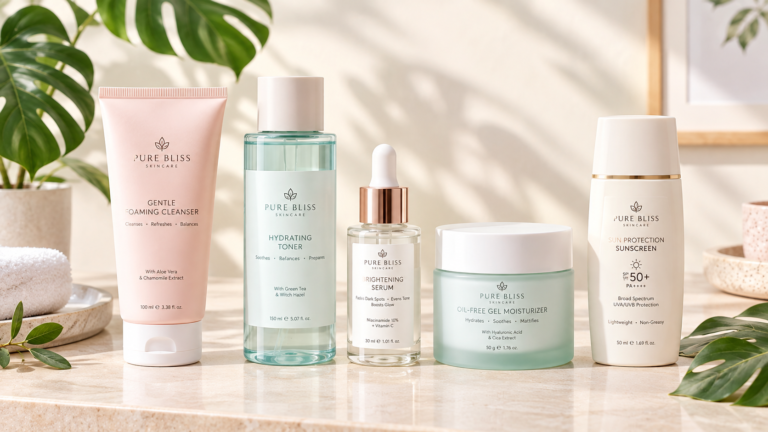
In contrast, dermatologist-recommended clinical skincare is formulated with precision, stability, and safety in mind. When you use a lab-tested serum, the ingredients are bio-compatible, meaning they are engineered to mimic and support the skin’s natural functions without altering its ideal pH levels.

For sensitive skin types, science-backed actives like Ceramides, Hyaluronic Acid, and Niacinamide act as medicine. Instead of attacking the skin, they active-repair the intercellular glue that holds your skin cells together. Clinical products are also heavily tested for stability; they won’t oxidize on your vanity or invite bacterial growth, ensuring that every single drop delivers a safe, calculated dose of efficacy.
Signs Your Kitchen Routine Has Damaged Your Skin Barrier
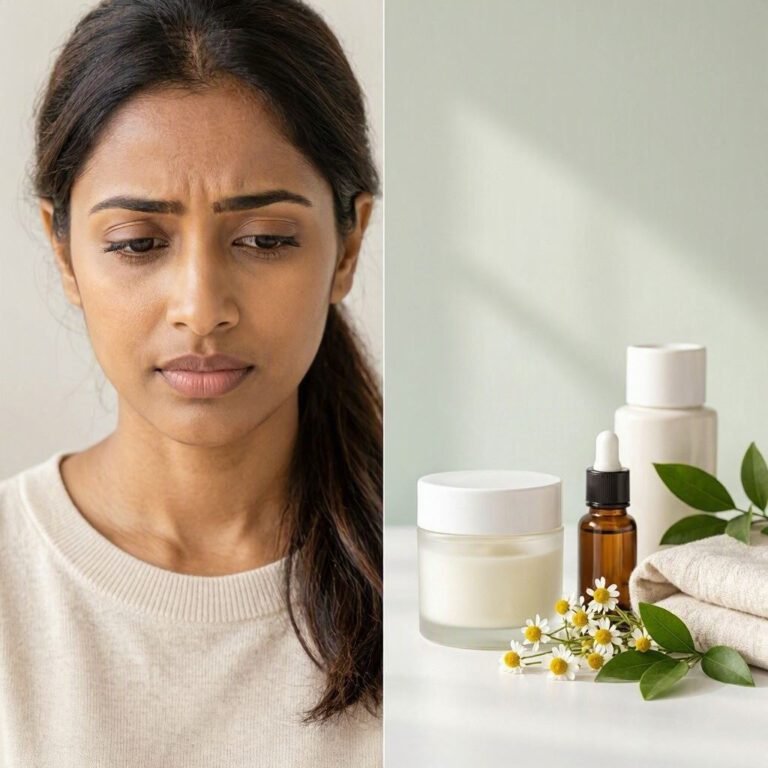
“When analyzing the DIY Skincare vs Dermatologist debate, how do you know if your routine has crossed the line from self-care to serious skin damage?”A compromised skin barrier speaks through very specific symptoms. If you experience a persistent, uncomfortable burning sensation when applying even the mildest moisturizer, your protective shield is down.

Other clear signs include chronic redness that doesn’t fade, sudden dry and flaky patches, and a tight, shiny texture that feels stripped of all natural oils. When the barrier is torn, moisture escapes rapidly (known as Transepidermal Water Loss), leaving your skin raw, hypersensitive, and easily irritated by wind, sun, or touch.
The Therapist’s Verdict: Feed Your Skin from Within
As a professional skin therapist, here is my golden rule: Kitchen ingredients belong in your diet, not on your delicate face. The vitamins, antioxidants, and minerals your skin craves—like Vitamin A, B, and C—are far more powerful when digested than when applied raw to the skin surface. When you feed your body a nutrient-rich diet, stay heavily hydrated, and maintain a consistent exercise routine, your skin naturally detoxifies and glows from within.
By focusing on internal wellness, you build a resilient, naturally clear complexion. The best part? When your skin health is managed through a healthy lifestyle, you drastically reduce your dependency on heavy clinical products and targeted dermatologist actives. Treat your body right from the inside, and you won’t need a counter full of chemicals to mimic a healthy glow.
Frequently Asked Questions (FAQs)
“To help you navigate the DIY Skincare vs Dermatologist dilemma, here are the most common skincare questions answered.”
Q1. Is it safe to use raw lemon juice on my face if I dilute it with water?
Answer: As a professional therapist, I highly advise against it. Even when diluted, raw lemon juice remains highly unpredictable in its acidity and contains a compound called psoralen. When psoralen reacts with sunlight, it can cause severe chemical burns, redness, and long-lasting hyperpigmentation on sensitive skin.
Q2. How long does it take to repair a damaged skin barrier from DIY skincare?
Answer: Depending on the severity of the damage, it typically takes anywhere from 14 days to over a month for the skin barrier to fully heal. During this time, you must stop all physical scrubs, harsh acids, and kitchen experiments. Stick to a minimal routine focused strictly on hydration and ceramide-based clinical repair.
Q3. Can organic ingredients like honey or curd replace a clinical moisturizer?
Answer: While organic honey and curd are excellent occasional soothing masks, they cannot completely replace a formulated clinical moisturizer. Clinical moisturizers are uniquely designed with specific ratios of ceramides, cholesterol, and fatty acids that seal moisture deep within the skin layers for 24 hours, which raw kitchen ingredients cannot achieve.
Q4. Are all dermatologist-recommended actives full of harsh chemicals?
Answer: Not at all. “Chemical” is often misunderstood as a negative word. Many dermatologist-recommended actives are actually derived from natural sources but are purified, stabilized, and standardized in a lab. For instance, Hyaluronic Acid is inherently present in our own body cells, making clinical actives much safer and controlled than raw, unpurified kitchen ingredients.
Q5. Is Besan (Gram Flour) truly effective for deep cleansing, or does it dry out the skin?
Answer: Yes, Besan is a time-tested, traditional natural cleanser that can effectively deep-cleanse the skin. It contains natural saponins that naturally bind with excess oil, dirt, and pollution particles on the skin’s surface and pull them out of the pores.
However, because Besan is highly oil-absorbing, using it daily on sensitive or dry skin can strip away your natural lipids and damage the skin barrier. To use it safely as a therapist-approved cleanser, limit its use to 1–2 times a week. If you have oily skin, mix it with rose water; if you have dry or sensitive skin, always mix it with full-fat milk, yogurt, or honey to prevent dehydration.
Medical Disclaimer
Disclaimer: The insights provided in this article are for educational and informational purposes only. Every individual’s skin chemistry is unique and can react differently. Always perform a patch test before trying any new ingredient—whether from your kitchen counter or a clinical lab. If you experience severe irritation, burning, or prolonged redness, consult a certified dermatologist immediately.